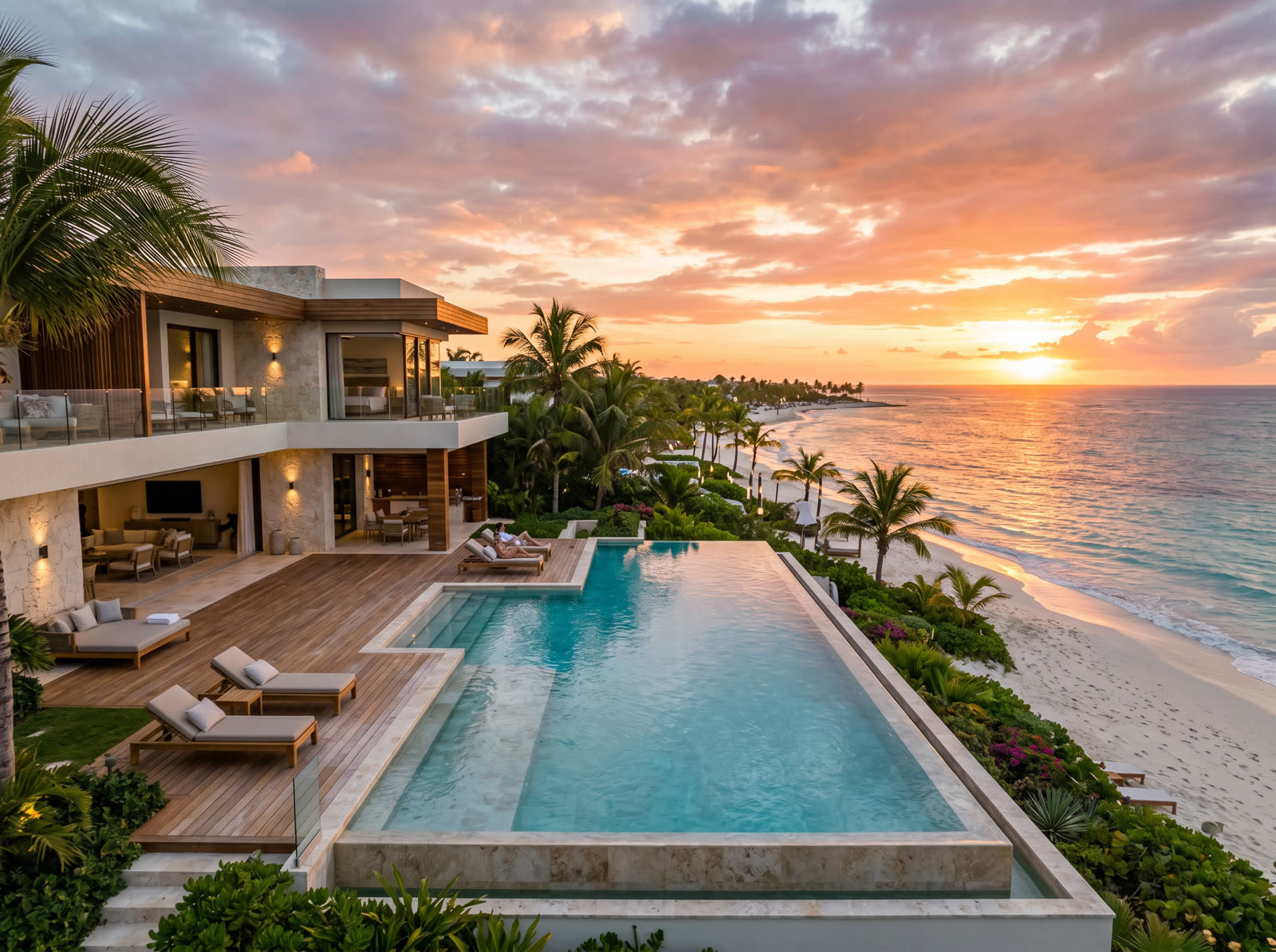
There is a moment that happens to nearly every first-time visitor to Cap Cana. They pass through the security gate on the Autopista del Este, the guards wave them through, and suddenly the world transforms. The road widens. The palms are meticulously spaced. The Caribbean appears on the horizon, impossibly blue, impossibly close. And the realization settles in: this is not a resort. This is an entire city built around the idea of perfection.
Cap Cana is the Dominican Republic's most ambitious real estate and tourism development — a privately managed 30,000-acre community at the eastern tip of Hispaniola, 20 minutes from Punta Cana International Airport. Since breaking ground in the early 2000s, it has matured into one of the Caribbean's most complete luxury destinations: world-class golf, a superyacht marina, coral-fringed beaches, championship restaurants, and an expanding collection of private villas that attract high-net-worth travelers from North America, Europe, and beyond.
This is the guide that Elite Collective — with years of on-the-ground experience managing and operating in Cap Cana — uses to orient new guests. Consider it your insider brief.
Juanillo Beach: The Crown Jewel
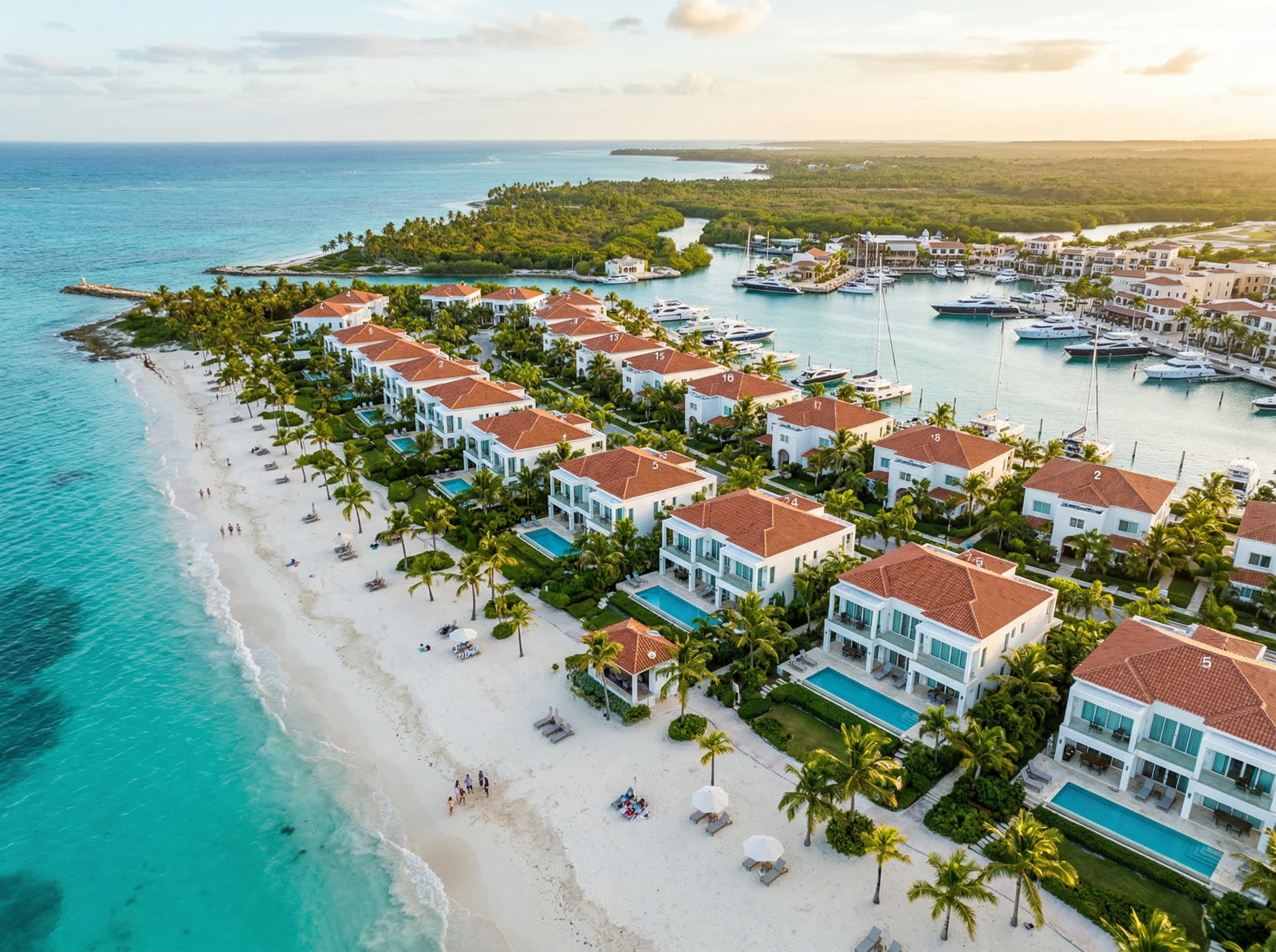
Every serious conversation about Cap Cana begins here. Juanillo Beach — officially Playa Juanillo — is a crescent of white coral sand that stretches roughly 800 meters along Cap Cana's southern coastline. The water is the archetypal Caribbean color palette: aquamarine in the shallows, shifting to cobalt at depth, with the clarity of glass.
What separates Juanillo from any beach you have encountered at a standard all-inclusive resort is its exclusivity. Access is restricted to Cap Cana residents and guests of Cap Cana properties, which keeps crowd levels manageable even during peak season. The beach is managed by the Eden Roc Cap Cana resort, which operates a beach club at its northern end — but the majority of the sand remains tranquil and uncrowded.
The water conditions here deserve specific mention. The reef system offshore significantly calms the surf, producing the kind of flat, warm water ideal for swimming with children, snorkeling the shallow reef edge, and launching paddleboards and kayaks. Current is minimal. Water temperature averages 27–29°C (80–84°F) year-round. It is, objectively, an exceptional beach.
Villa guests in Cap Cana with beach access rights — which Elite Collective can confirm for specific properties — have the additional luxury of accessing Juanillo without resort infrastructure: no check-in at a beach club, no minimum spend, just your group and the Caribbean.
Punta Espada Golf Club: The Course That Changed Everything
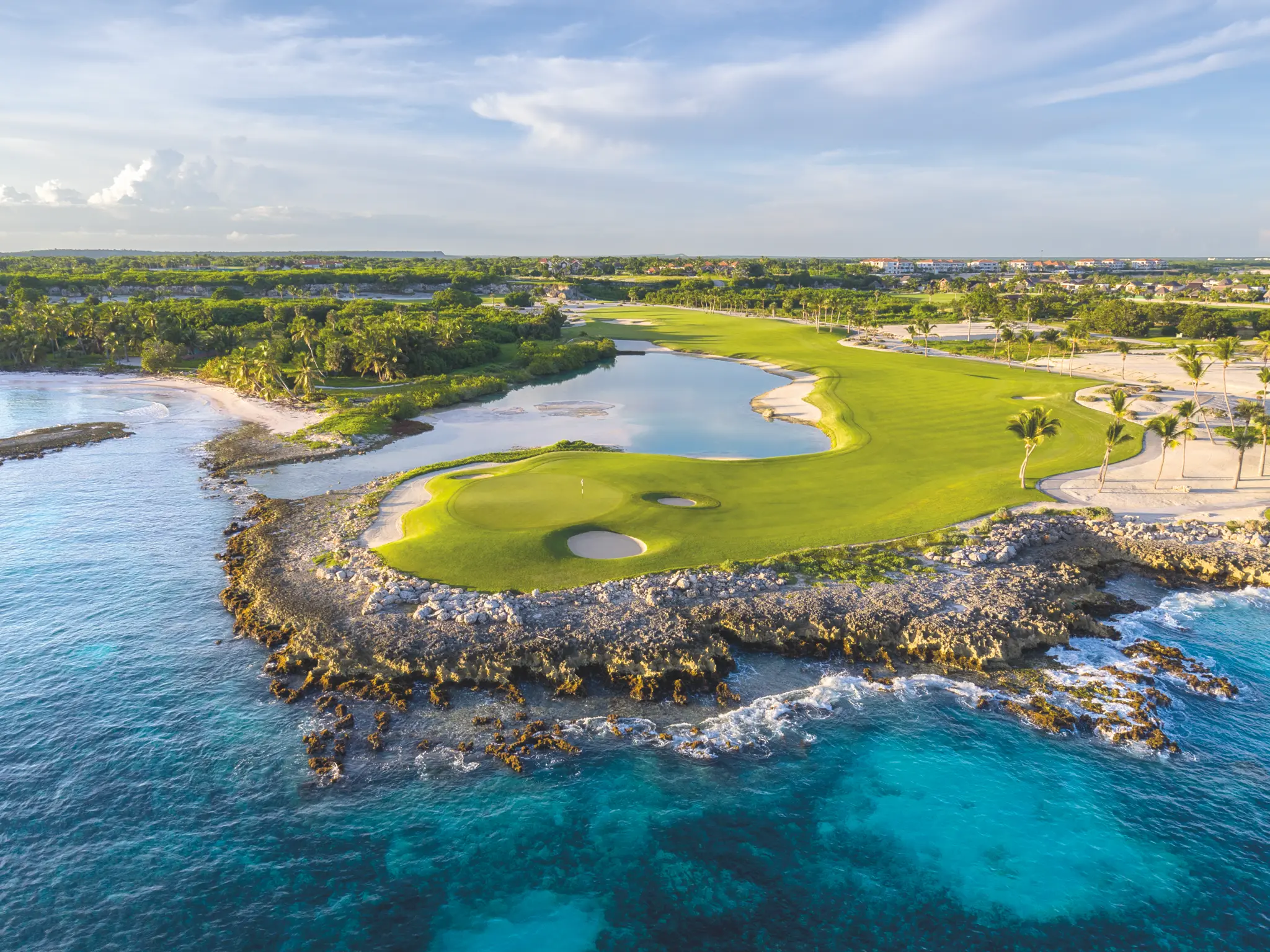
When Jack Nicklaus designed Punta Espada Golf Club, completed in 2006, the brief was straightforward: build the finest golf course in the Caribbean. The result is an 18-hole, par-72 layout that occupies the dramatic clifftop terrain above the sea, with eight holes playing directly along the ocean edge.
The signature hole is the par-3 fourth, where the tee box and green are separated by a 180-yard carry over the Caribbean, with the Atlantic wind a constant factor. Miss right and your ball disappears into the blue. It is one of the most photographed holes in the hemisphere, and it plays as dramatically as it photographs.
The course measures 7,243 yards from the championship tees, though for most guests the gold tees at 6,680 yards provide an ample and more enjoyable challenge. Greens are bentgrass, maintained to tournament standard. The fairways are zoysia, cut tight and true.
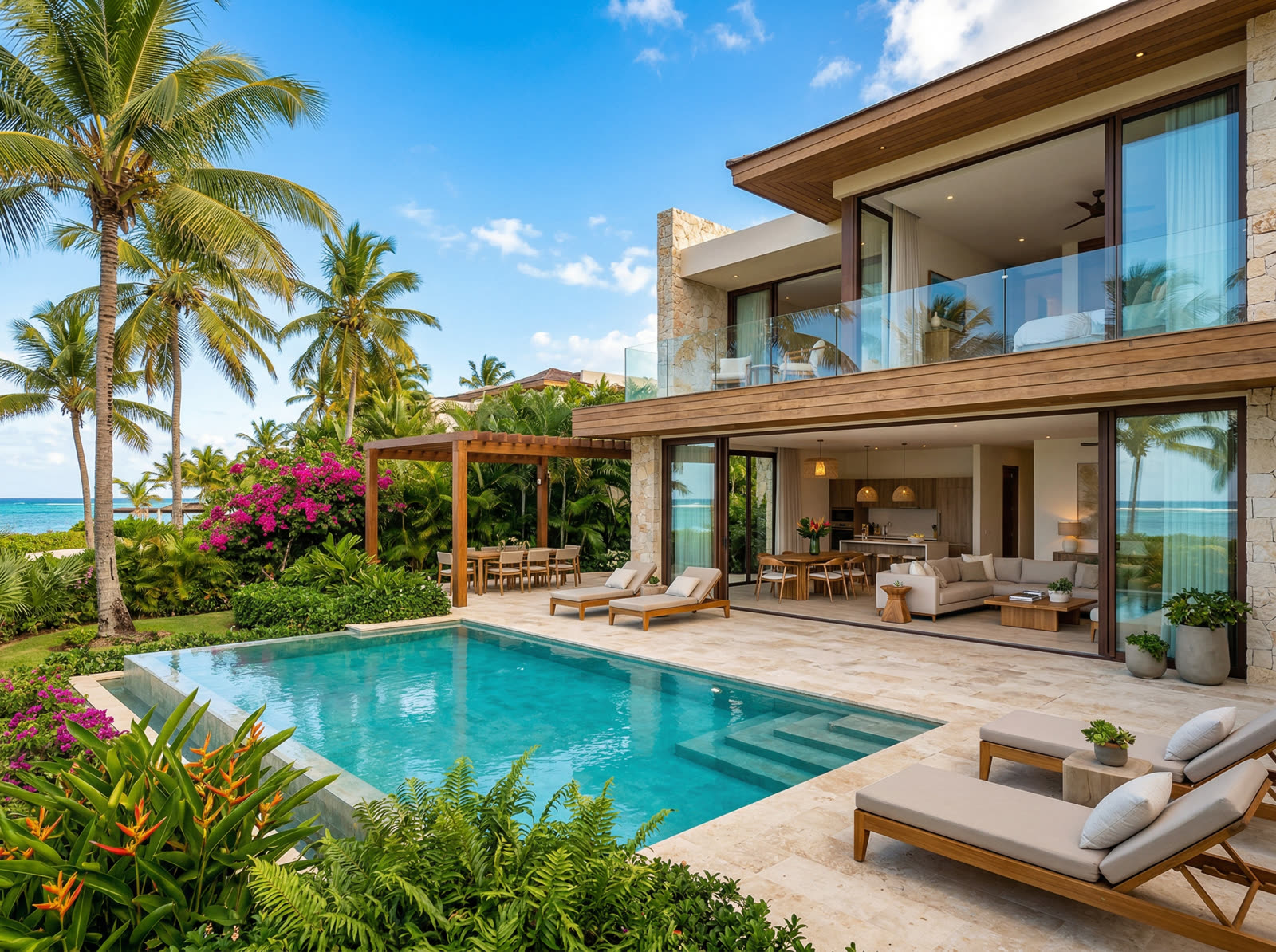
Green fees for guests without a club membership run approximately $275–$350 USD per round, including cart and caddie. For villa guests staying in the Punta Espada Estates neighborhood — a cluster of six-to-eight-bedroom villas directly within the course community — tee times are more accessible and the walk from villa to first tee is measured in seconds, not minutes.
Punta Espada has hosted the PGA Tour's Champions Tour Cap Cana Championship multiple times. Playing it is an experience that justifies a visit to Cap Cana on its own merits.
Eden Roc Cap Cana: The Resort Standard-Bearer
Eden Roc Cap Cana occupies a privileged position on the Juanillo headland — a 65-suite ultra-luxury resort that has been repeatedly cited among the finest properties in the Caribbean. Even if you are staying in a private villa (the superior choice for most groups), Eden Roc is a resource.
Its beach club at Juanillo is the social center of Cap Cana for many visitors, offering day access to non-guests at a minimum spend arrangement. The resort's signature restaurant, La Palapa, is one of the finest tables in the Dominican Republic — a seafood-focused dining room directly over the water, where lobster and sea bass arrive from the Cap Cana marina directly below. A tasting menu runs approximately $120–$180 USD per person with wine pairing, and the quality is comparable to any fine dining room in Miami or New York.
The spa at Eden Roc offers a full menu of treatments, and non-hotel guests can book through the concierge — Elite Collective guests regularly use this service as part of comprehensive vacation packages.
The Marina and Water Life
The Cap Cana Marina is the largest marina in the Caribbean by some measures, designed to accommodate vessels up to 250 feet. For guests, the marina is the departure point for deep-sea fishing charters, catamaran excursions to Isla Saona, private snorkeling tours, and sunset sailing experiences.
Cap Cana sits in one of the world's premium sportfishing zones. The deep-water trench known as the Wall runs close to shore, and blue marlin, white marlin, dorado (mahi-mahi), and wahoo are in season for much of the year. A full-day private sport fishing charter from the marina typically runs $1,200–$2,000 USD for the boat, and multi-day tournaments attract serious anglers from across North America.
The marina boardwalk is also the location of several Cap Cana restaurants and bars — a pleasant evening destination for a sundowner before dinner, with yachts illuminated at their berths and the lights of the community reflecting on the water.
Dining: The Best Tables in Cap Cana
Cap Cana's dining scene has evolved well beyond resort fare, and several restaurants warrant specific attention.
La Palapa at Eden Roc
As noted above: the premier fine dining experience in Cap Cana. Reserve in advance. The grilled whole snapper with Dominican chimichurri and the lobster thermidor are signature dishes. The wine list is predominantly French, with excellent Burgundy and Champagne options. Open for dinner daily; lunch service on weekends.
Little Sicily
A welcome departure from Caribbean seafood maximalism, Little Sicily delivers genuinely excellent Neapolitan cuisine in a casual marina-adjacent setting. House-made pasta, wood-fired pizza, and an Italian wine list that would not embarrass a trattoria in Naples. The spaghetti alle vongole — clams sourced from the local fishermen that morning — is remarkable. Main courses average $25–$45 USD. Excellent for families.
Jellyfish Restaurant
Located just outside the Cap Cana gate near Playa Bávaro, Jellyfish is a Cap Cana and Punta Cana institution — a beachfront restaurant with feet-in-the-sand dining, excellent grilled seafood, and a lively atmosphere particularly at Sunday lunch. The fresh catch platter for two is $90–$120 USD and is the size of a small continent. The frozen passion fruit mojito is mandatory.
Scape Park: Adventure in the Limestone
Eight kilometers from the Cap Cana gate, Scape Park is a 1,500-acre eco-adventure park built around a series of natural cenotes, limestone cliffs, and tropical forest. The centerpiece is Hoyo Azul — a 40-meter-deep cenote filled with turquoise water of extraordinary clarity, surrounded by cliffs draped in tropical vegetation. Photographs do not adequately communicate the scale.
Beyond Hoyo Azul, Scape Park offers zip-lining through jungle canopy, ATV tours of the surrounding terrain, a sky cycling circuit, a wave pool, and guided nature walks. The park operates 9 a.m. to 5 p.m. daily; all-access passes run approximately $95 USD per adult and $75 USD for children. Elite Collective can arrange private guided entry with preferred timing — avoiding the morning rush of resort buses that typically arrives between 10 and 11 a.m.
Getting to Cap Cana: Arrival and Transfers
Cap Cana is served by Punta Cana International Airport (PUJ), the Dominican Republic's busiest airport and one of the Caribbean's most connected hubs. Direct flights operate from New York (JFK, EWR), Miami, Charlotte, Atlanta, Boston, Toronto, Montreal, London Gatwick, Madrid, Paris CDG, Zurich, and numerous other cities.
The drive from PUJ to the Cap Cana gate is 20–25 minutes on the Autopista del Este. Elite Collective arranges private transfer services — an air-conditioned SUV meets guests at arrivals, handles luggage, and delivers directly to the villa gate. For larger groups, a private van or minibus is available. The cost for a private SUV transfer is approximately $60–$80 USD one way; far preferable to shared shuttle arrangements.
Quick Reference: Cap Cana Essentials
- Airport: Punta Cana International (PUJ) — 20 min drive
- Best months: December–April (dry season); May–August also excellent with lower rates
- Average temperature: 28–32°C (82–90°F) year-round
- Currency: Dominican Peso; USD widely accepted in Cap Cana
- Golf: Punta Espada — book 2–3 weeks ahead in peak season
- Beach access: Juanillo Beach — restricted to Cap Cana guests/residents
- Marina: Largest in the Caribbean; fishing charters and water sports daily
When to Visit: Seasons and Strategy
Cap Cana operates on a year-round basis, and the Dominican Republic's eastern coast is one of the most climatically stable Caribbean destinations. The island's geography — specifically, the central mountain ranges — blocks the trade winds and most of the rainfall before it reaches the eastern seaboard, producing a microclimate that is drier and sunnier than comparable Caribbean destinations.
December through April is peak season: minimal rain, low humidity, temperatures in the high 20s Celsius, and the full complement of resort services and restaurant operations. Villa rates peak in late December and Presidents' Week (mid-February). Book three to six months ahead for these periods.
May through August offers excellent value. Rates drop 15–30% from peak, while weather remains generally excellent — afternoon showers occur 2–3 days per week but rarely disrupt an entire day's plans. The sea is flat, the courses are quieter, and the beach is emptier. This is the season experienced Cap Cana travelers often prefer.
September and October is hurricane season. While Cap Cana has sophisticated drainage infrastructure and has historically fared better than most Caribbean destinations in storm events, the risk is real. Travel insurance is essential if booking this period; rates are at their annual low.
"Cap Cana is not simply a destination — it is an argument for what the Caribbean can be when it takes itself seriously as a luxury address."
For returning visitors who know the Dominican Republic well, Cap Cana occupies a singular position. It is the eastern Caribbean's answer to the Algarve, to Cap Ferrat, to Palm Beach: a private, managed, beautiful community that takes the pleasures of the tropics and surrounds them with the infrastructure of serious luxury. A week here rarely feels like enough.