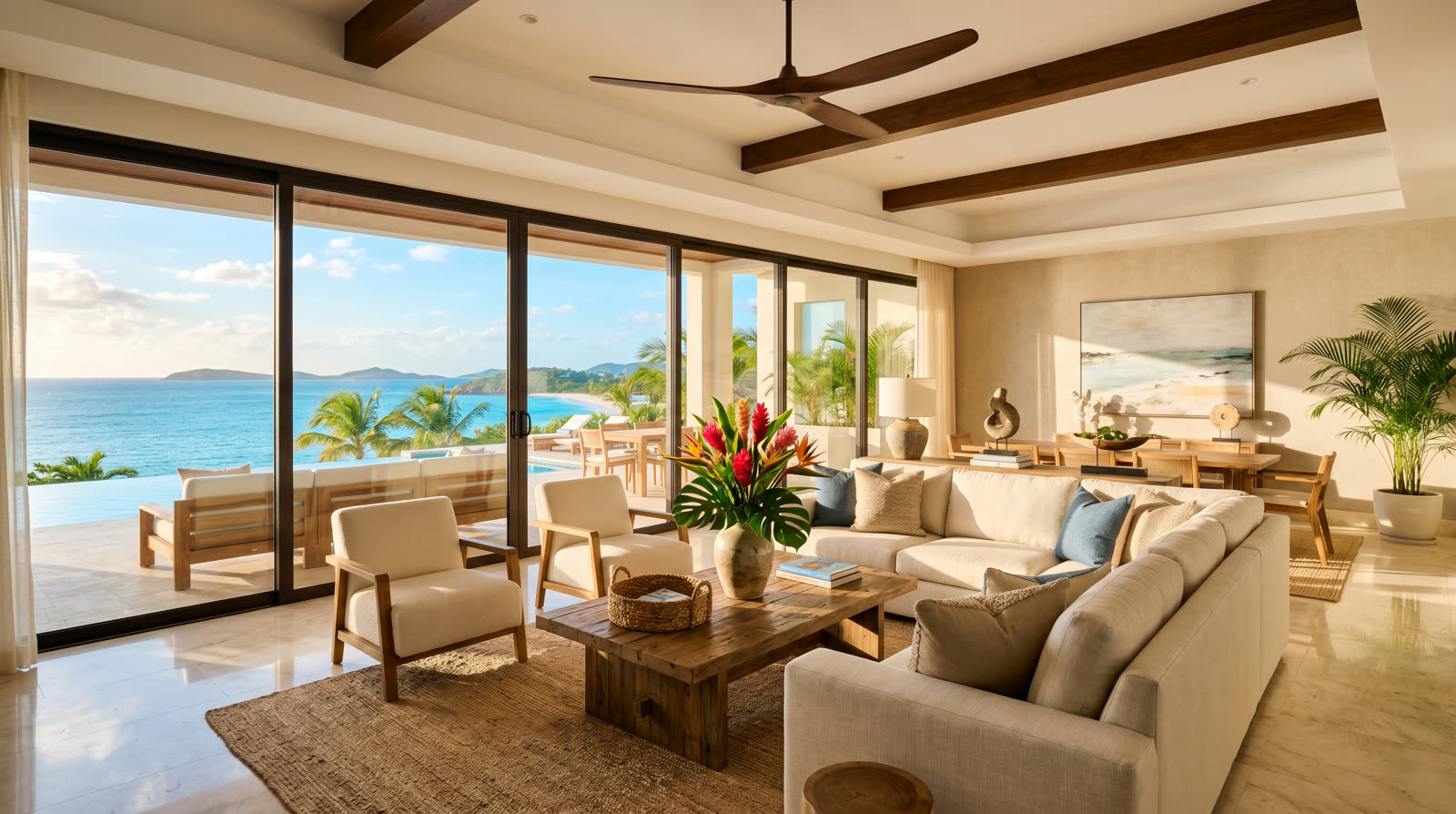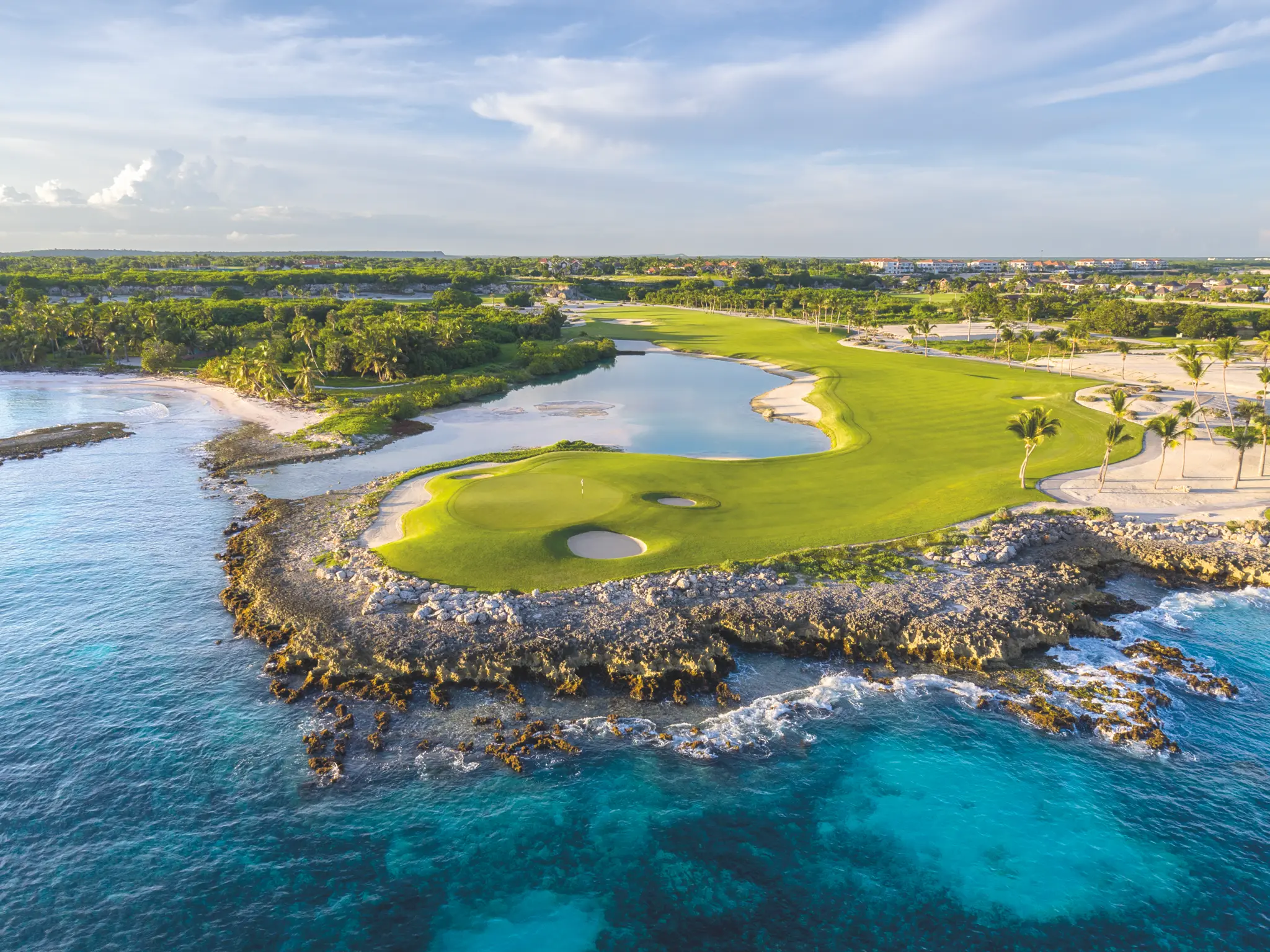

The window for truly early-mover advantage in Dominican Republic luxury real estate closed years ago — Cap Cana land that sold for $40 per square meter in 2004 now trades at $400–$800. But the window for smart, well-timed investment remains wide open, and the confluence of factors currently shaping the DR market may not recur in this form.
Tourism figures are at historic highs. CONFOTUR tax incentives remain among the most generous in the hemisphere. Cap Cana and Punta Cana continue to draw institutional capital from global hotel brands. And the supply of premium managed villas available for short-term luxury rental consistently trails demand — meaning professional property management translates directly into occupancy rates and gross yields that most real estate markets cannot approach.
This article is not a sales document. It is an analysis, written by practitioners who operate in this market daily, of why 2026 represents a compelling moment for investors with a three-to-seven-year horizon.
The Tourism Foundation: Structural, Not Cyclical
The Dominican Republic received over 10 million international visitors in 2024, making it the most visited destination in the Caribbean — ahead of Puerto Rico, Cuba, Jamaica, and the Bahamas. This is not a post-pandemic rebound anomaly. Visitor numbers have grown in 14 of the last 16 years, driven by expanding air connectivity, the relative affordability of the DR versus competing Caribbean luxury destinations, and the continued development of high-end infrastructure.
Punta Cana International Airport (PUJ) is now the airport with the most direct transatlantic connections in the Caribbean, with nonstop service from 45+ North American cities and direct routes to London, Madrid, Paris, Frankfurt, Amsterdam, Zurich, and Zurich. This connectivity is not the result of demand following supply — it is the result of airlines responding to a decade of consistently high load factors on existing routes.
For real estate investors, the significance of this tourism base is simple: short-term rental demand for luxury properties is deep and consistent. Cap Cana villas in Elite Collective's managed portfolio routinely achieve 60–75% annual occupancy when properly priced and marketed. In peak season (December–April), high-quality properties are fully booked months in advance.
CONFOTUR: The Tax Incentive Most Investors Underestimate
Law 158-01 — commonly known as CONFOTUR — is the Dominican Republic's primary mechanism for attracting foreign real estate investment in tourism zones. For investors purchasing property within a CONFOTUR-approved project, the incentives are substantial:
CONFOTUR Incentives for Qualifying Tourism Properties
- Property tax (IPI) exemption: 15 years from the date of first purchase. Properties with a value over 8.4 million DOP (approximately $140,000 USD) normally incur 1% annual IPI. CONFOTUR eliminates this entirely.
- ITBIS (VAT) exemption: No 18% sales tax on the purchase of CONFOTUR-designated properties — a significant reduction in acquisition cost.
- Transfer tax exemption: The standard 3% property transfer tax is waived for qualifying purchases.
- Income tax on rental income: Rental income generated by a CONFOTUR-registered property may qualify for reduced or zero income tax during the incentive period, subject to legal structuring.
- Import duty exemptions: Furnishings, construction materials, and equipment imported for use in a CONFOTUR property may qualify for import duty relief.
To put the ITBIS exemption in concrete terms: on a $1.5 million villa purchase, the standard 18% VAT would represent $270,000 in additional cost. CONFOTUR eliminates this. Combined with the transfer tax waiver and 15 years of property tax exemption, the effective all-in cost savings for a CONFOTUR-qualified purchase in Cap Cana frequently exceed 20–25% of acquisition price.
The critical caveat is that not all DR real estate qualifies for CONFOTUR. Projects must be formally registered and approved, and the classification must be verified by a Dominican attorney before purchase. Elite Collective's owner relations team works with qualified legal counsel in Cap Cana and can connect investors with attorneys experienced in CONFOTUR due diligence.
Cap Cana Appreciation: The Track Record
Cap Cana's land and villa appreciation story over the past two decades is well-documented among Caribbean real estate professionals. The community broke ground in the early 2000s and sold initial lots at prices that seem almost fictional by today's standards. Beachfront lots in Juanillo that transferred in 2006 for under $300,000 now represent assets worth $2–4 million as developed estate properties.
The appreciation curve has moderated from those early windfall years — which is, arguably, healthy. Cap Cana is now a mature, institutional market rather than a speculative frontier. Luxury villa values in established sub-communities (Punta Espada, Juanillo Beachfront, Marina Residences) have appreciated 6–10% annually over the past five years, outperforming comparable luxury real estate in Florida, the Bahamas, and most of the eastern Caribbean.
The pipeline of new ultra-luxury hotel development within Cap Cana continues to add to this trajectory. The entry of brands like Waldorf Astoria (under development) and the expansion of existing properties signals that institutional hotel operators — who underwrite very conservative assumptions — believe in the long-term trajectory of Cap Cana land values.
Rental Yields: What the Numbers Actually Look Like
Gross rental yields of 8–12% on luxury Cap Cana villas are achievable but require specificity. Let us model a representative scenario.
A five-bedroom Cap Cana villa acquired for $1.8 million, professionally managed by Elite Collective, with a pool, full staff, and beach club access, might rent for:
- Peak season (Dec–Apr): $2,800–$4,500/night. At 80% occupancy over 150 peak days: $250,000–$400,000 in peak revenue.
- Shoulder season (May–Aug): $1,800–$2,800/night. At 55% occupancy over 120 shoulder days: $118,000–$185,000.
- Off-peak (Sep–Nov): $1,200–$1,800/night. At 35% occupancy over 90 days: $37,000–$56,000.
Combined gross annual revenue: approximately $400,000–$640,000. Property management, staff, utilities, maintenance, and marketing typically run 35–45% of gross revenue in this segment. Net operating income before debt service: $220,000–$350,000. On an acquisition cost of $1.8 million, this represents a net yield of 12–19% in a favorable scenario.
These figures assume professional management, strategic pricing, and a property maintained to the standards that command top-tier nightly rates. They are achievable — Elite Collective's managed portfolio has multiple properties performing within this range — but they are not guaranteed. Properties that are poorly managed, inconsistently maintained, or overpriced for their tier significantly underperform.
"The DR is one of the very few markets where a luxury property can generate genuinely institutional returns while also being an asset you actually want to visit."
Comparison to Other Caribbean Markets
Investors evaluating Caribbean real estate frequently consider the DR alongside competing markets. A brief comparison:
Turks and Caicos (Grace Bay)
The premier Caribbean luxury market for per-key value — beachfront villas in Providenciales routinely transact at $5–$15 million for comparable specifications. Rental yields are similar (8–12% gross) but entry costs are two to four times higher, dramatically reducing absolute returns in dollar terms. No income tax (advantageous) but significant HOA and infrastructure costs in developments like Chalk Sound and Turtle Tail.
Bahamas (Nassau / Paradise Island)
High acquisition costs with significant hurricane exposure. The market has shown pricing strength near Albany and Lyford Cay but limited inventory. Rental management infrastructure is less mature than Cap Cana's. No income tax on rental income, but property costs and operational expenses are substantially higher than the DR.
Mexico (Los Cabos, Riviera Maya)
A more mature and competitive short-term rental market with higher occupancy pressure. Mexican real estate held through a fideicomiso (bank trust) carries additional complexity and cost for foreign owners. Appreciation in established Cabo markets has been strong but entry-level luxury now requires $2M+ for comparable assets.
The Dominican Republic's differentiated position: CONFOTUR incentives reduce effective acquisition cost; tourism demand is deep and growing; the management infrastructure (exemplified by operators like Elite Collective) has matured significantly; and entry price points relative to comparable assets in competing markets remain compelling.
Financing Options: What's Available
Foreign buyers purchasing Dominican Republic real estate typically have three financing pathways:
- Cash purchase: The most common approach for buyers at the premium end, eliminating currency risk and simplifying ownership structure. CONFOTUR purchases are typically structured this way to preserve the tax efficiency of the acquisition.
- Dominican bank financing: Available to foreign buyers through institutions including Banco Popular, Banreservas, and Scotiabank DR. Terms typically require 30–40% down, offer rates of 7–10% in USD-denominated loans, and require proof of income documentation. Loan-to-value ratios are more conservative than comparable U.S. or European lenders.
- Developer financing: Several Cap Cana developers offer structured payment plans on new-build or pre-construction properties — typically 20–30% at contract, with staged payments through construction and a final balance at title transfer. Interest on these arrangements varies by developer.
The choice of financing structure has significant implications for CONFOTUR benefit preservation and effective yield. We recommend engaging a qualified Dominican attorney and a tax advisor familiar with cross-border real estate structuring before committing.
The Management Equation: Why Ownership Structure Matters
A $2 million villa managed by a professional operator that achieves 65% annual occupancy will consistently outperform a $2.5 million villa managed by an owner remotely through a listing platform at 40% occupancy. The property management decision is, for income-producing properties, as important as the acquisition decision.
Elite Collective manages a portfolio of luxury properties in Cap Cana and Punta Cana under a full-service model: revenue management, professional photography and marketing, guest experience management, villa maintenance, staff oversight, and owner reporting. Our fee structures are aligned with performance — we succeed when owners succeed.
For investors evaluating the DR market, the management conversation should happen early in the process — before acquisition, not after. The choice of management partner shapes everything from rental positioning to maintenance standards to the occupancy trajectory of the first year.